We are currently facing the highest inflation rates in forty years. In April, the inflation rate was 6.8% in Canada and 8.3% in the United States. It is scary to think that these rates pale in comparison to the levels hit in the 1980’s which were as high as almost 14% in Canada and 15% in the United States.
In addition to the current inflationary pressures, the stock markets performance is also the weakest since 2008. How this double whammy affects you is based on your age, working status and income bracket. Today, I will look at two scenarios: those of you still working and those of you retired or close to retirement.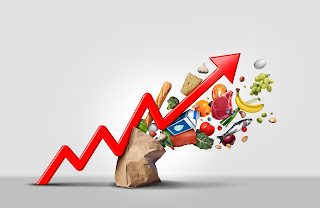
Working Individual
The Effect of Inflation on Your Cost of Living
In addition to the current inflationary pressures, the stock markets performance is also the weakest since 2008. How this double whammy affects you is based on your age, working status and income bracket. Today, I will look at two scenarios: those of you still working and those of you retired or close to retirement.

Working Individual
The Effect of Inflation on Your Cost of Living
The current environment of low interest rates (although they are moving higher quickly), the war on Ukraine and supply chain issues are a rare economic mix. I certainly have no clarity of where inflation is going and I am definitely not qualified to comment. I will just say personally, I am concerned we are stuck with higher than usual inflation for a while until the supply chain is restored to “normal” or the demand side drops.
While not representative of the population in general, a sizable portion of my blog’s readership are high-net-worth (“HNW”) individuals and owners of successful private corporations. If you are part of this economic group, you are undoubtedly feeling the impact of the rise in inflation. However, in general, HNW individuals are typically not as significantly impacted by inflation, as their higher monthly income provides a buffer to absorb higher monthly costs. In addition, many HNW jobs and business goods and services are in demand currently, resulting in higher wages and/or profits. While the above is not the case in all situations, for many high-net-worth people, inflation has a minor impact on their day to day lives.
If you are not a high net worth individual, the rise in inflation can be painful. The high cost of gasoline, groceries, restaurants, clothing, travel, appliances, cars etc. has raised your monthly costs 7% or so, or maybe higher depending upon how you consume or if you are required to drive long distances for work.
So how does one offset inflation costs if their wages are not covering the increase in costs? Essentially, you have to watch your day-to-day spending and consider delaying or cutting-out some discretionary spending. This is also a suitable time to update or create a monthly budget.
You may want to consider the following tips to help you offset your rising costs and expenses:
1. Review your Mortgage Term -As we are seeing, governments are increasing interest rates to offset inflationary pressures. How high and for how long these rate hikes continue are unknown. But interest rates in most cases cause the largest potential impact to family costs in the form of higher mortgage costs. If you have a mortgage advisor or financial planner, you should discuss with them whether you should lock in rates for a longer-term mortgage to provide cost stability. If you do not have a planner, educate yourself as best as possible and speak to people you trust about what tact you may want to take in respect of your mortgage.
2. Reduce and Consolidate Consumer Debt - Consumer debt can become very costly when interest rates rise. You need to consider if you can pay down any of this debt or consolidate into a lower interest rate.
3. Contain Food Costs -This is not a micro-cost savings blog, so I am not going to get into cost saving details, but as we all know, grocery and restaurant costs have increased substantially. You may need to pay more attention to your grocery planning and cut back on your restaurant visits.
4. Drive Smartly -With the explosion in gasoline prices, it may be prudent to cut down some non-essential driving and when driving with your spouse or companion, you may want to use the most gas efficient vehicle rather than the “nicer car”.
5. Cancel Unnecessary Subscriptions and Fees -You may want to review your various subscriptions and fees; as if you are like most people, one or two are not providing much value. This would include gym costs that are often new years resolutions that fade by March.
6. Review Larger Discretionary Costs -You unfortunately may have to consider cutting back or delaying on planned discretionary expenditures such as travel, home improvements, RRSP contributions etc.
Many of your other expenses can be reduced or cut. Again, I suggest you prepare a detailed budget to help identify those expenses.
The Second Punch – The Stock Market Decline
The stock market has taken a large hit in 2022 (the TSX has done better than most), however, the reality is that unless you are near retirement, you should have several more years to make-up any current year losses whether you are a high-net worth individual or not.
While your investment statements will not be pretty, the strong market returns of the last few years have created a buffer. Historically, a long-time horizon until retirement will allow you to recover any current losses and hopefully have some significant future returns.
This may be the appropriate time to review your advisor’s three, five and ten year investment returns to their established benchmarks and review their annual fees, to ensure you returns are reasonable and you are receiving value for your fees. I will not discuss potential re-allocations of your portfolio, as those should be discussed with your investment advisor. Keep in mind short-term fixes often come back to haunt you when things turn around. So, keeping to your plan with a couple tweaks, often is the best course of action, but speak with your advisor who is aware of your personal situation.
Given many people have reported significant capital gains the last few years, you may want to discuss with your advisor (or consider yourself if you are a DIY investor) realizing capital losses on speculative holdings or other stocks that have suffered losses and do not fit your current investment strategy. Any losses realized in 2022 can be carried back against capital gains in 2019, 2020 and 2021.
The Effect of Inflation and Poor Markets on Retirees or Those People Close to Retirement
I have written a couple times on how much money you need to retire. In 2014, I wrote an extensive six-part series titled How Much Money do I Need to Retire? Heck if I Know or Anyone Else Does! (the links to this series are under Retirement on the far-right hand side of the blog).
I updated this series between January and March 2021, including a discussion on the factors that can impact both the funding of your retirement nest egg and your withdrawal rate in retirement. The randomness and unpredictability of these factors can derail even the most detailed retirement plans.
Two of the most impactful factors on retirement planning are inflation and sequence of returns. As both these factors have reared their ugly heads at the same time, this one-two combo can really throw a wrench into the accumulation of your future nest egg if you are close to retirement. Furthermore, they can impact the retirement savings and withdrawal rates of those already retired.
Inflation Can Dramatically Impact Your Retirement
Many financial plans I have seen over the last few years have been using a 2% inflation rate. However, a 2% inflation rate is at least in the short-term 4-5% too low. If inflation holds, many retirees will need to reduce costs and may have to make larger than anticipated withdrawals from their retirement funds.
The following excerpt taken from Investopedia, quantifies an example of the damage inflation can do to an American receiving social security. “In terms of the actual amount of money that inflation can cost retirees, the numbers are startling. LIMRA Secure Retirement Institute constructed a model demonstrating the effect inflation could have on the average Social Security benefit over a period of 20 years. According to its research, a 1% inflation rate could swallow up $34,406 of retirees’ benefits. If the inflation rate were to increase to 3%, the shortfall would total more than $117,000”.
Hopefully, the spike in the inflation rate is a short-term blip and government policies cause the rate of inflation to settle down to more recent levels. If not, there is no magical panacea. Retirees will be forced to review spending and possibly cut-back on items that are not necessary or substitute cheaper alternatives.
Stock Market Declines and Sequence of Returns
As discussed above, for non-retirees, a drop in the market historically provides short-term pain only, as the investors portfolio has a long-time frame to recover and grow. However, for retirees (and possibly near-retirees) that is not the case and they are subject to what is known as Sequence-of-Returns Risk. For purposes of retirement planning, this refers to the random order in which investment returns occur and the impact of those random returns on people who are in retirement. In plain English, it relates to whether you are the unlucky person that retires into a bear(ish) market in 2022 or the lucky person who retired into the bull market five years ago. This is important because if your returns are poor early on, your retirement nest egg will not last as long as someone who had good returns early in retirement.
For full transparency, most of the discussion below comes from prior blogs I have written on the subject of sequence of returns.
The sequence of returns phenomenon is illustrated very clearly on page 7 of this report by Moshe Milevsky and by W. Van Harlow of Fidelity Research Institute. In this example, two portfolios have the same return over 21 years but in inverse order. The portfolio with the positive returns initially ends up worth $447,225 in year 13, while the portfolio with the negative returns was depleted in year 13.
If you read the article, you will note the authors also discuss the affect of inflation.
Can you solve for the sequence of returns?
Michael Kitces and Wade Pfau two of the most renowned retirement specialists both seem to agree that people can reduce the impact of sequence of returns near to, or early in retirement, by using something called a rising equity glidepath in retirement.
This strategy has you starting retirement with a lower equity component in your portfolio—30%, for example—and increasing it throughout retirement to, say 65% or 70%. The advice is counterintuitive, since consensus advice has always been to reduce equity as we age. But as Mr. Kitces and Mr. Pfau point out here and here (at the 6:12 mark), the glidepath actually reduces losses in your nest egg when you most need it (at the beginning of your retirement) and allows for recovery in later years as your equity increases.
I am not qualified to condone or dismiss the equity glidepath. I am just pointing out some alternative thinking by two retirement specialists.
Retirement planning is difficult at the best of times, it can get downright ugly when inflation and poor markets occur simultaneously. Let’s hope, these are just short-term blips, but they are a wake-up call to the random risks we always have in saving for retirement and more acutely, for those already in retirement.
While not representative of the population in general, a sizable portion of my blog’s readership are high-net-worth (“HNW”) individuals and owners of successful private corporations. If you are part of this economic group, you are undoubtedly feeling the impact of the rise in inflation. However, in general, HNW individuals are typically not as significantly impacted by inflation, as their higher monthly income provides a buffer to absorb higher monthly costs. In addition, many HNW jobs and business goods and services are in demand currently, resulting in higher wages and/or profits. While the above is not the case in all situations, for many high-net-worth people, inflation has a minor impact on their day to day lives.
If you are not a high net worth individual, the rise in inflation can be painful. The high cost of gasoline, groceries, restaurants, clothing, travel, appliances, cars etc. has raised your monthly costs 7% or so, or maybe higher depending upon how you consume or if you are required to drive long distances for work.
So how does one offset inflation costs if their wages are not covering the increase in costs? Essentially, you have to watch your day-to-day spending and consider delaying or cutting-out some discretionary spending. This is also a suitable time to update or create a monthly budget.
You may want to consider the following tips to help you offset your rising costs and expenses:
1. Review your Mortgage Term -As we are seeing, governments are increasing interest rates to offset inflationary pressures. How high and for how long these rate hikes continue are unknown. But interest rates in most cases cause the largest potential impact to family costs in the form of higher mortgage costs. If you have a mortgage advisor or financial planner, you should discuss with them whether you should lock in rates for a longer-term mortgage to provide cost stability. If you do not have a planner, educate yourself as best as possible and speak to people you trust about what tact you may want to take in respect of your mortgage.
2. Reduce and Consolidate Consumer Debt - Consumer debt can become very costly when interest rates rise. You need to consider if you can pay down any of this debt or consolidate into a lower interest rate.
3. Contain Food Costs -This is not a micro-cost savings blog, so I am not going to get into cost saving details, but as we all know, grocery and restaurant costs have increased substantially. You may need to pay more attention to your grocery planning and cut back on your restaurant visits.
4. Drive Smartly -With the explosion in gasoline prices, it may be prudent to cut down some non-essential driving and when driving with your spouse or companion, you may want to use the most gas efficient vehicle rather than the “nicer car”.
5. Cancel Unnecessary Subscriptions and Fees -You may want to review your various subscriptions and fees; as if you are like most people, one or two are not providing much value. This would include gym costs that are often new years resolutions that fade by March.
6. Review Larger Discretionary Costs -You unfortunately may have to consider cutting back or delaying on planned discretionary expenditures such as travel, home improvements, RRSP contributions etc.
Many of your other expenses can be reduced or cut. Again, I suggest you prepare a detailed budget to help identify those expenses.
The Second Punch – The Stock Market Decline
The stock market has taken a large hit in 2022 (the TSX has done better than most), however, the reality is that unless you are near retirement, you should have several more years to make-up any current year losses whether you are a high-net worth individual or not.

While your investment statements will not be pretty, the strong market returns of the last few years have created a buffer. Historically, a long-time horizon until retirement will allow you to recover any current losses and hopefully have some significant future returns.
This may be the appropriate time to review your advisor’s three, five and ten year investment returns to their established benchmarks and review their annual fees, to ensure you returns are reasonable and you are receiving value for your fees. I will not discuss potential re-allocations of your portfolio, as those should be discussed with your investment advisor. Keep in mind short-term fixes often come back to haunt you when things turn around. So, keeping to your plan with a couple tweaks, often is the best course of action, but speak with your advisor who is aware of your personal situation.
Given many people have reported significant capital gains the last few years, you may want to discuss with your advisor (or consider yourself if you are a DIY investor) realizing capital losses on speculative holdings or other stocks that have suffered losses and do not fit your current investment strategy. Any losses realized in 2022 can be carried back against capital gains in 2019, 2020 and 2021.
The Effect of Inflation and Poor Markets on Retirees or Those People Close to Retirement
I have written a couple times on how much money you need to retire. In 2014, I wrote an extensive six-part series titled How Much Money do I Need to Retire? Heck if I Know or Anyone Else Does! (the links to this series are under Retirement on the far-right hand side of the blog).
I updated this series between January and March 2021, including a discussion on the factors that can impact both the funding of your retirement nest egg and your withdrawal rate in retirement. The randomness and unpredictability of these factors can derail even the most detailed retirement plans.
Two of the most impactful factors on retirement planning are inflation and sequence of returns. As both these factors have reared their ugly heads at the same time, this one-two combo can really throw a wrench into the accumulation of your future nest egg if you are close to retirement. Furthermore, they can impact the retirement savings and withdrawal rates of those already retired.
Inflation Can Dramatically Impact Your Retirement
Many financial plans I have seen over the last few years have been using a 2% inflation rate. However, a 2% inflation rate is at least in the short-term 4-5% too low. If inflation holds, many retirees will need to reduce costs and may have to make larger than anticipated withdrawals from their retirement funds.
The following excerpt taken from Investopedia, quantifies an example of the damage inflation can do to an American receiving social security. “In terms of the actual amount of money that inflation can cost retirees, the numbers are startling. LIMRA Secure Retirement Institute constructed a model demonstrating the effect inflation could have on the average Social Security benefit over a period of 20 years. According to its research, a 1% inflation rate could swallow up $34,406 of retirees’ benefits. If the inflation rate were to increase to 3%, the shortfall would total more than $117,000”.
Hopefully, the spike in the inflation rate is a short-term blip and government policies cause the rate of inflation to settle down to more recent levels. If not, there is no magical panacea. Retirees will be forced to review spending and possibly cut-back on items that are not necessary or substitute cheaper alternatives.
Stock Market Declines and Sequence of Returns
As discussed above, for non-retirees, a drop in the market historically provides short-term pain only, as the investors portfolio has a long-time frame to recover and grow. However, for retirees (and possibly near-retirees) that is not the case and they are subject to what is known as Sequence-of-Returns Risk. For purposes of retirement planning, this refers to the random order in which investment returns occur and the impact of those random returns on people who are in retirement. In plain English, it relates to whether you are the unlucky person that retires into a bear(ish) market in 2022 or the lucky person who retired into the bull market five years ago. This is important because if your returns are poor early on, your retirement nest egg will not last as long as someone who had good returns early in retirement.
For full transparency, most of the discussion below comes from prior blogs I have written on the subject of sequence of returns.
The sequence of returns phenomenon is illustrated very clearly on page 7 of this report by Moshe Milevsky and by W. Van Harlow of Fidelity Research Institute. In this example, two portfolios have the same return over 21 years but in inverse order. The portfolio with the positive returns initially ends up worth $447,225 in year 13, while the portfolio with the negative returns was depleted in year 13.
If you read the article, you will note the authors also discuss the affect of inflation.
Can you solve for the sequence of returns?
Michael Kitces and Wade Pfau two of the most renowned retirement specialists both seem to agree that people can reduce the impact of sequence of returns near to, or early in retirement, by using something called a rising equity glidepath in retirement.
This strategy has you starting retirement with a lower equity component in your portfolio—30%, for example—and increasing it throughout retirement to, say 65% or 70%. The advice is counterintuitive, since consensus advice has always been to reduce equity as we age. But as Mr. Kitces and Mr. Pfau point out here and here (at the 6:12 mark), the glidepath actually reduces losses in your nest egg when you most need it (at the beginning of your retirement) and allows for recovery in later years as your equity increases.
I am not qualified to condone or dismiss the equity glidepath. I am just pointing out some alternative thinking by two retirement specialists.
Retirement planning is difficult at the best of times, it can get downright ugly when inflation and poor markets occur simultaneously. Let’s hope, these are just short-term blips, but they are a wake-up call to the random risks we always have in saving for retirement and more acutely, for those already in retirement.
This site provides general information on various tax issues and other matters. The information is not intended to constitute professional advice and may not be appropriate for a specific individual or fact situation.
It is written by the author solely in their personal capacity and cannot be
attributed to the accounting firm with which they are affiliated. It is not intended to constitute professional
advice, and neither the author nor the firm with which the author is associated
shall accept any liability in respect of any reliance on the information
contained herein. Readers should always consult with their professional advisors in respect of their particular
situation. Please note the blog post is time sensitive and subject to
changes in legislation or law.


